3.16.2009
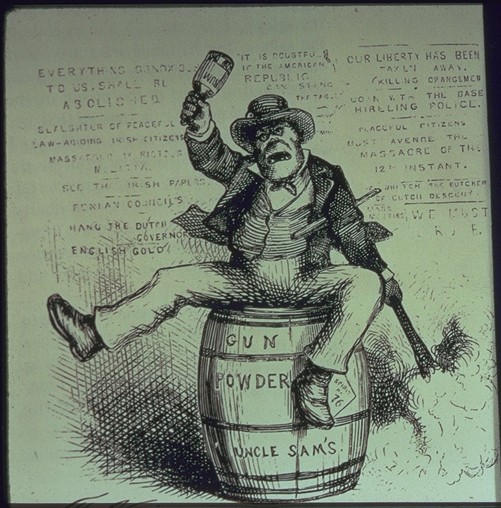
God gave the Irish whiskey so that they wouldn't take over the world (3)
Tomorrow is Saint Patrick's Day (for those of you who do not know a lot about Saint Patrick, I would encourage you to click on this link). I do feel it is my duty as someone who has Irish ancestors to educate others about my own heritage. While there a many individuals (Irish & non-Irish) who understand and appreciate the life and legacy of Patrick, too many others take this holy man and feast day for granted. In fact, racial & ethnic groups throughout the world (especially college students) have decided to equate this HOLIDAY with consuming a substantial amount of alcohol. In doing so, this feast day loses its ultimate meaning and becomes a shameful display that it was never intended to be.

3.12.2009
color commentary plus q & q (life notes #3)
Ronald Takaki and Joel Spring both examine the Mexican and Latin American (Puerto Rico, Cuba, Portugese-speaking Brazilians, French-speaking Haitians, and many more) communities from the perspective of United States labor exploitation, deculturalization and educational reform efforts. Both authors are very clear about the tremendous amount of agony that the Mexican people endured as they emigrated across the Mexico/US (Texas) border. They are also clear that the US had, at seemingly no stage during the 19th & early 20th century, no intention of allowing the migrant Mexicans to share their own customs, language and lifestyle with the American people. The only item on the US' political & financial agenda was to work these laborers into the ground and seize their property right from underneath them. The US knew how powerful they were (and still are) and took advantage of the weak and vulnerable, yet somewhat skilled, populations of Mexicans and Latin Americans.
qualitative quotations:
"[American invaders are] the horde of banditti, of drunkards, of fornicators...vandals vomited from hell, monsters who bid defiance to the laws of nature...shameless, daring, ignorant, ragged, bad-smelling, long-bearded men with hats turned up at the brim, thirsty with the desire to appropriate our riches and our beautiful damsels" (Takaki, 175).
[The reason I selected this quote was because I feel like we often do not hear from those are oppressed and the atrocities & injustice that they experience. For once, they have a voice. This author seems to have had it with the severe maltreatment that has been happening between both communities.]
"Don't condemn me for leaving my country, poverty and necessity are at fault. Good-bye, pretty Guanajuato the state in which I was born. I'm going to the United States far away from you...Good-bye, my beloved country, now I am going away....I go to the United States to seek to earn a living. Good-bye, my beloved land; I bear you in my heart" (Takaki, 317).
[This quote reveals what it was like, emotionally, for the people of Mexico to leave their homeland. Takaki does a fairly good job of describing this diaspora; however, I cannot imagine how painful it must have been to leave just about everything behind--including family.]
"The white people won't do the work and they won't live as the Mexicans do on beans and tortillas and in one room shacks. Whites cannot be as easily domineered, led, or directed as the Mexicans. I prefer Mexican labor to other classes of labor. It is more humble and you get more for your money. No other class we could bring to Texas could take his place. He's a natural farm laborer" (Takaki, 321).
[I don't know what to make of this quote, but it is rather disturbing. The author is speaking as if the Mexican people ENJOY their accommodations and on-site treatment. It almost sounds as if the white author believes that he is doing the Mexican people a favor by ]
"There would be a revolution in the community if the Mexicans wanted to come to the white schools. Sentiment is bitterly against it. It is based on racial inferiority. Let him [the Mexican] have as good an education but still let him know he is not as good as a white man. God did not intend him to be; He would have made them white if He had. Why don't we let the Mexicans come to the white school? Because a damned greaser is not fit to sit side of a white girl" (Takaki, 327).
[Similar to the quotation below, I chose this one because it highlighted the "racial inferiority" that had invaded the local & national school systems as well as one white man's religious understanding between himself and a Mexican man. I have never heard the term "greaser" before, but I would imagine that it is highly offensive.]
"Educating the Mexicans is educating them away from the job, away from the dirt. You have doubtless heard that ignorance is bliss; it seems that is so when one has to transplant onions...So you see it is up to the white population to keep the Mexican on his knees in an onion patch or in new ground. This does not mix very well with education" (Spring, 95).
[This quote illustrates the self-serving attitudes of the white community members to restrict the Mexican people from acquiring an education of some sort and continue to exploit their strong agricultural skills. The white community members believe it is their duty to create this educational & labor division. These words also appears in Takaki's A Different Mirror.]
critical questions:
question #1: Both Joel Spring and Ronald Takaki have noted that the characteristics and work ethic of the Mexican people were contributing factors to the efficient labor that was completed in mid-to-late 19th century America. If this is accurate, then I would like to know why the Mexican people were so willing to labor for individuals who had the utmost disrespect for them and their culture? Was it simply due to the fact that US landowners offered significantly higher wages or was it more than financial security?
question #2: My girlfriend was born and raised in Lima, Peru. She came to the US after her father (who lost his private business in Lima) moved and established himself in the Pacific Southwest. She attended UNLV for one year and then transferred to Loyola Marymount in LA a few years later. I met her through a well-known service organization, known as the Jesuit Volunteer Corps, and we have been together ever since. What are the chances that this relationship would have ever been born had the two of us been living anytime before the 1950s? Why is that?
question #3: Throughout the assigned readings, there are multiple instances when the Mexican people speak out against members of the black community. These interactions remind me of the ones that the Irish had with the black community in the early to mid 1800s. My question then is why do the Mexican (and Irish) people turn against and curse the black laborers & community members, when they are experiencing the same emotions and turmoil as their counterparts? Are these actions easier and much less threatening than empathizing with another racial/ethnic group?
3.11.2009
WBC (who bleepin' cares) (3)
As a die-hard sports fan, I consider this time of year to be extra-special as the professional baseball season is about to begin and the field of 64 Div. 1 college basketball teams are about to compete at the BIG DANCE (a.k.a the NCAA Tourney). For the past few years though, a new event has been slated to take place during these late winter weeks--namely the World Baseball Classic (WBC). The WBC is a double-elimination tournament between the best and most gifted baseball players from all over the globe (i.e. Chinese Taipai, Dominican Republic, Japan, Italia, and the US of A). Many spectators and analysts have compared this culturally-charged sporting event to the World Cup; however, the general consensus is that there is no comparison! The sport of soccer has had much more cultural and historical relevance to just about every country (regardless of population or fan-base) throughout the world. One of the main reasons why the WBC has been under a lot of scrutiny since its inception is that the WBC games take place in the middle of MLB's spring training season, when managers and players are trying to prepare for their long and grueling 162-game season. Over the past few years, numerous MLB players and coaches have claimed that participation in the WBC has brought them early fatigue and thrown off their schedule & rhythm heading into April. Personally, I think it is a great thing, but unfortunately, like anything new, it hasn't been around long enough and many of the international players are simply unrecognizable, compared to the much more notable players who play in the Major Leagues. There has been some discussion as to whether a better time of the year (such as after the World Series) to hold these contests, but the jury is still out on what to make of this cultural event.
corporate cleveland (3)
Dr. Weems and myself seem to disagree on the opportunity of high students to work part-time in the corporate while also attending classes during the academic school year. Dr. Weems does not like this theory or practice, because working in a corporate office is not part of a child's education; in fact, it is a major hindrance and distraction. This was not what our founding fathers intended for the American educational system to be. I, on the other hand, believe that this corporate exposure for teenagers is invaluable (and I have personally witnessed the effects of such a program during my short stay at St. Martin de Porres HS, which is located in the St. Clair-Superior neighborhood and part of the Cristo Rey Network...see video clips in the margin). Students in the 9th thru 12th grades are required to spend one day per week working at a corporate setting. This service allows for each low-income student and their families to attend St. Martin's, which has an estimated tuition of $11,000 per year. More importantly, I think, the CWSP (Corporate Work Study Program), which is what this program is called, provides teenagers with the soft & hard skills (i.e. time management, organization, conflict resolution, professionalism, networking, career orientation) that not only will be introduced to them, but refined and polished as they step onto college campuses.
2.26.2009
southern comfort film (3)
For one of our ED 453 classes, we watched a documentary entitled Southern Comfort (SC). Ironically, I left the film and class feeling rather uncomfortable. SC was based on a true story about a transsexual person named Robert whose medical history, family & friends, and love life are all examined. Robert, who is suffering from cervix cancer, is irate with the manner in which his physicians treated he and his surgical requests. Throughout the film, Robert is being comforted by some of his transgender, transsexual and homosexual friends and a special attention is paid by the director (and Robert) to his transgender girlfriend, Lola. It is in this relationship that the audience is able to view Robert in both thought and emotion.
I would like to close by saying that I was fascinated by a statement Robert made towards the end of the film--namely that "being a man or woman has nothing to do with your genitalia. It's all about your heart." I'm not sure if I necessarily agree with Robert, but then again, I am examining and interpreting this situation from a very different vantage point.
I would be remiss if I failed to comment on the role that my religious beliefs had on my film viewing. Considering myself to be a Catholic with strong beliefs, I keep asking myself why an individual's sexual orientation and sexual practice do not always coincide. The Catholic Church teaches that only a natural man and woman are meant to have sexual intercourse and procreate--which is apparently not the case between Robert & Lola (one of them was born a female and the other a male). That being the case, I would still argue that Robert and Lola (along with some of their other friends/partners) are abusing their human sexuality, because God did not intend for them to born of the opposite gender. If He did, I don't believe He would have forced them to undergo such pain and scrutiny from others--especially in the medical field.
I would like to close by saying that I was fascinated by a statement Robert made towards the end of the film--namely that "being a man or woman has nothing to do with your genitalia. It's all about your heart." I'm not sure if I necessarily agree with Robert, but then again, I am examining and interpreting this situation from a very different vantage point.
2.24.2009
a letter from a friend serving in Japan (3)
When most people think of Japan, they think of Tokyo; if they could only go to one city in Japan, it would be Tokyo. Am I right?
The problem is, I hate Tokyo. I have been there 3 times, and each time I was underwhelmed. Sure, I have had fun, but mostly because I enjoy the company of the people I have traveled with. Tokyo is too big, too crowded, too expensive, and you basically spend most of your time on the train or walking around looking at over-priced clothing.
However, that did not stop me from trying out Tokyo for a fourth time this past weekend. (Fourth times a charm?) On Saturday after work, I headed up with a big group (about 11 of us), although on Sunday we broke up into smaller groups, so I spent the majority of my time in Tokyo with my friends Derrick, Susannah, and Gwen. Although the trip did not change my feelings about Tokyo, I did have a blast. Here are some highlights:
- Clubbing at Ageha, which is Tokyo's biggest club. It has like a million rooms...and a swimming pool!! The only problem is that a lot of the club (including the pool and the bar that served Long Islands) is outside...which must be great in the summer, but not so much in the winter.
- After staying out all night, going to an Internet cafe in Akihabara (the electronics/nerd district...also made infamous by the guy who went on a stabbing spree here last spring) to sleep for three hours. For $12, I slept in a comfy reclining chair in a tiny cubicle. Classy right? But after spending $200 on the shinkansen ride alone, we had to cut corners somewhere.
- All you can eat okonomiyaki and monjayaki (Tokyo's version of okonomiyaki) lunch at a restaurant in Harajuku. For only $11!! Amazing. And totally worth the 90 minute wait.
- Eating at both Wendy's AND Burger King in Shibuya (think famous intersection from Lost in Translation) after we paid $33 each for nabe at a nice restaurant. The meat in our nabe was waaay too fatty and chewy (we still are not sure what kind of meat it was...damn menus all in Japanese), so we were quite hungry after basically eating boiled cabbage soup for dinner.
- Spending 2 hours sampling chocolate in a department store back in Nagoya. In preparation for Valentine's Day (yes, the Japanese celebrate it!), about 50 or 60 high-class chocolatiers hawk their goods in Takashimaya, which is an upscale department store. Most of them offer free samples, so Susannah and I basically went to every booth, perusing and tasting. And now I have quite a stomachache. haha
Besides Tokyo, I have been keeping myself quite busy on the weekends since I returned to Japan from my all-too-brief vacation in the States. Last weekend, a group of us ventured out to the boonies to visit a plastic food factory, where I got to make my very own plastic shrimp tempura!!! Plastic food is a essential part of the Japanese dining experience. All the restaurants have windows out front with plastic versions of their menu items. It's a very helpful practice, especially for foreigners, because it shows us what the restaurant serves...therefore, little effort is needed to read the menu! So you can imagine my excitement when I got to make my own plastic food! (And yes, it looks real!)
I also started taking Japanese lessons (better late than never, right?) with Derrick and Susannah. My new year's resolution was to study more, but I apparently am not as self-motivated as I thought. Not trying to look like an idiot in front of my friends and our super-sweet teacher is just the kick in the pants I needed. So far, the class is going well. I know a lot more than I thought, which is cool, but there is also a lot I don't know. Like how to read and write kanji (the Chinese symbols). But we learn like 15 every week, so that has been really fun and interesting.
In other non-Japan news, I was also accepted to my first graduate school a few weeks ago. I fooled Seton Hall into allowing me into their master's program for international relations. It's not my top choice, but I am glad to be in somewhere! The DC-area schools (where I actually WANT to go) won't get back to me until March/April...which is annoying and stressful. But I do have a future at least!
Once again, sorry this email is so long...as usual. haha. Just wanted to check in and let everyone know about my latest escapades. I miss everyone immensely...New Year's was such a tease!
Write back soon please! :)
xoxo
Beth
language barriers (2)
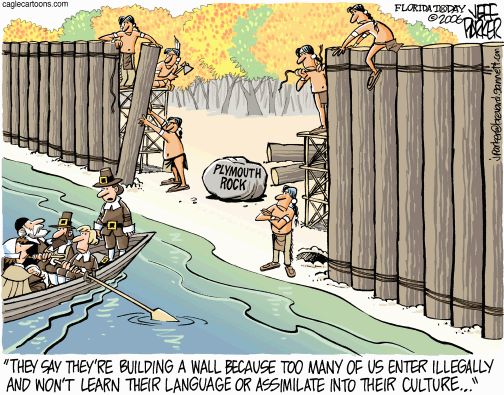
I am often amazed by the role that language plays in our everyday interactions. Words and phrases are how we share information and ideas. We use them to explain our wants and needs and fears and hopes. Even newborns implore sounds and gestures to communicate with their caregivers. Yet as important as language & communication seem to be, it is shocking that so few people are good communicators! If you are like me and you took four years of french (vs. spanish or german or italian) in high school, there is certainly a grace period when it comes to understanding a sentence like "te metiste en camisa de once baras," which, if translated literally from spanish to english, means "you've put on a shirt made of eleven sticks" (http://www.learn-spanish.com.mx/spanish-phrases/funny-spanish-phrases/). This, of course, makes no sense! However, what this idiomatic spanish phrase actually means that "you've bitten off more than you can chew" (http://www.learn-spanish.com.mx/spanish-phrases/funny-spanish-phrases/). While it is sometimes very difficult to understand a language that is not your own. No one is asking you to be dishonest with yourself or your correspondent. Nevertheless, it is important that all members of all languages/cultures do their very best to learn the language (even if limited) of the men, women and children that they live, work and converse with. Otherwise, we all will continue to be frustrated by situations like the one featured in the Yo Yao video clip posted in the right-hand margin.
Subscribe to:
Posts (Atom)